THE TRANSISTOR
A switch and amplifier
The first transistor, built at Bell Labs in December 1947, used two gold contacts on a slab of germanium to boost a signal up to 100 times.
See the timeline doodlechip
00HOW A MICROCHIP WORKS
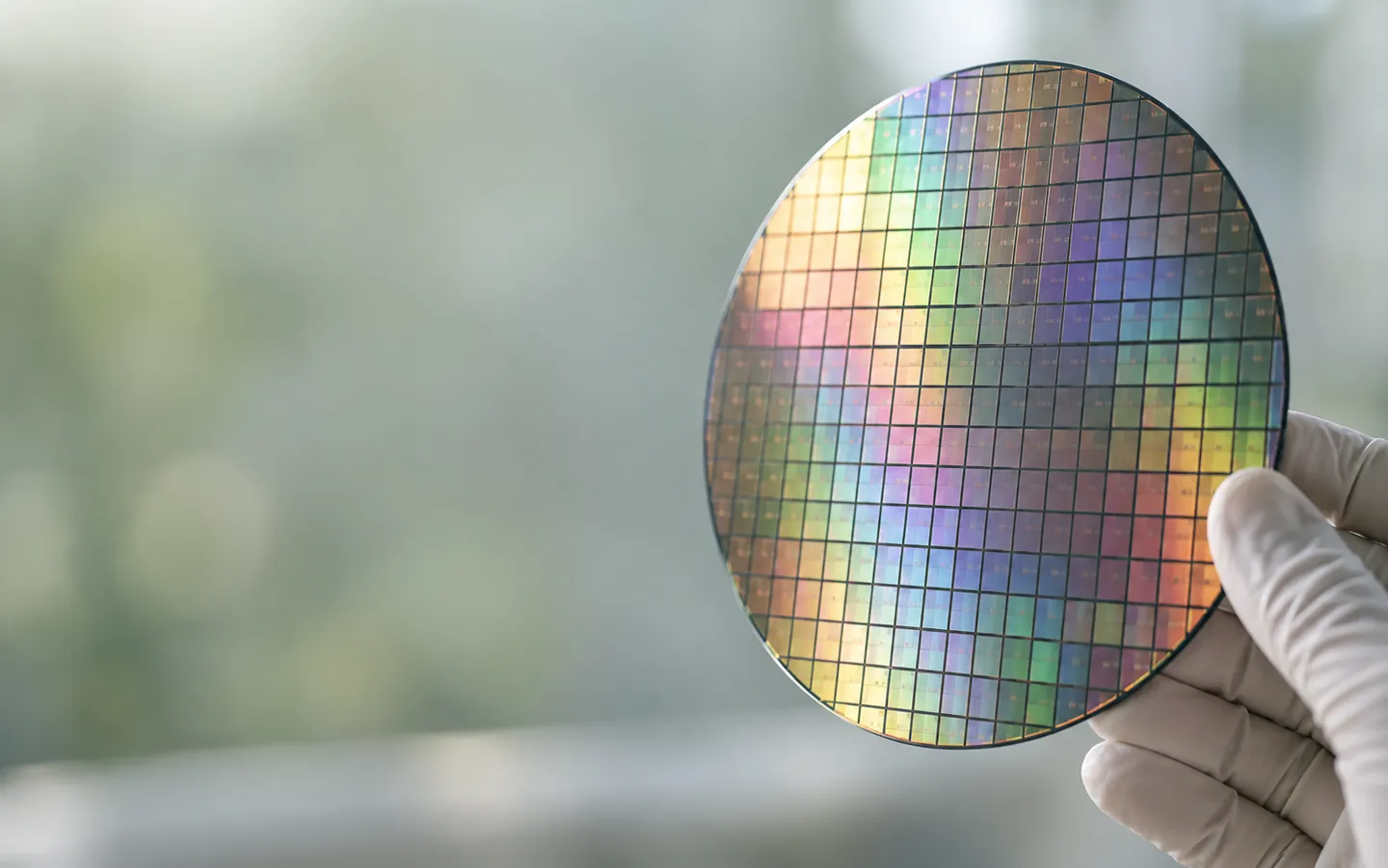
Almost every electronic thing runs on a chip.
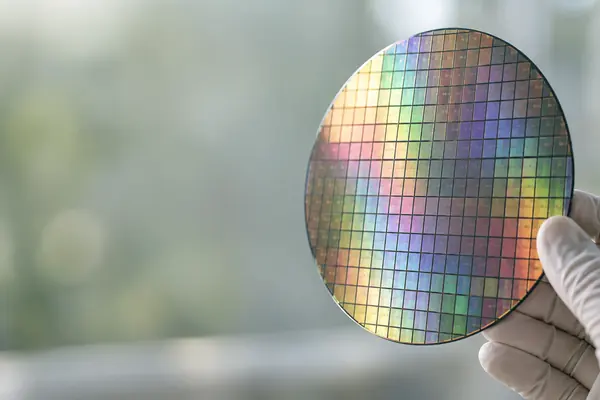
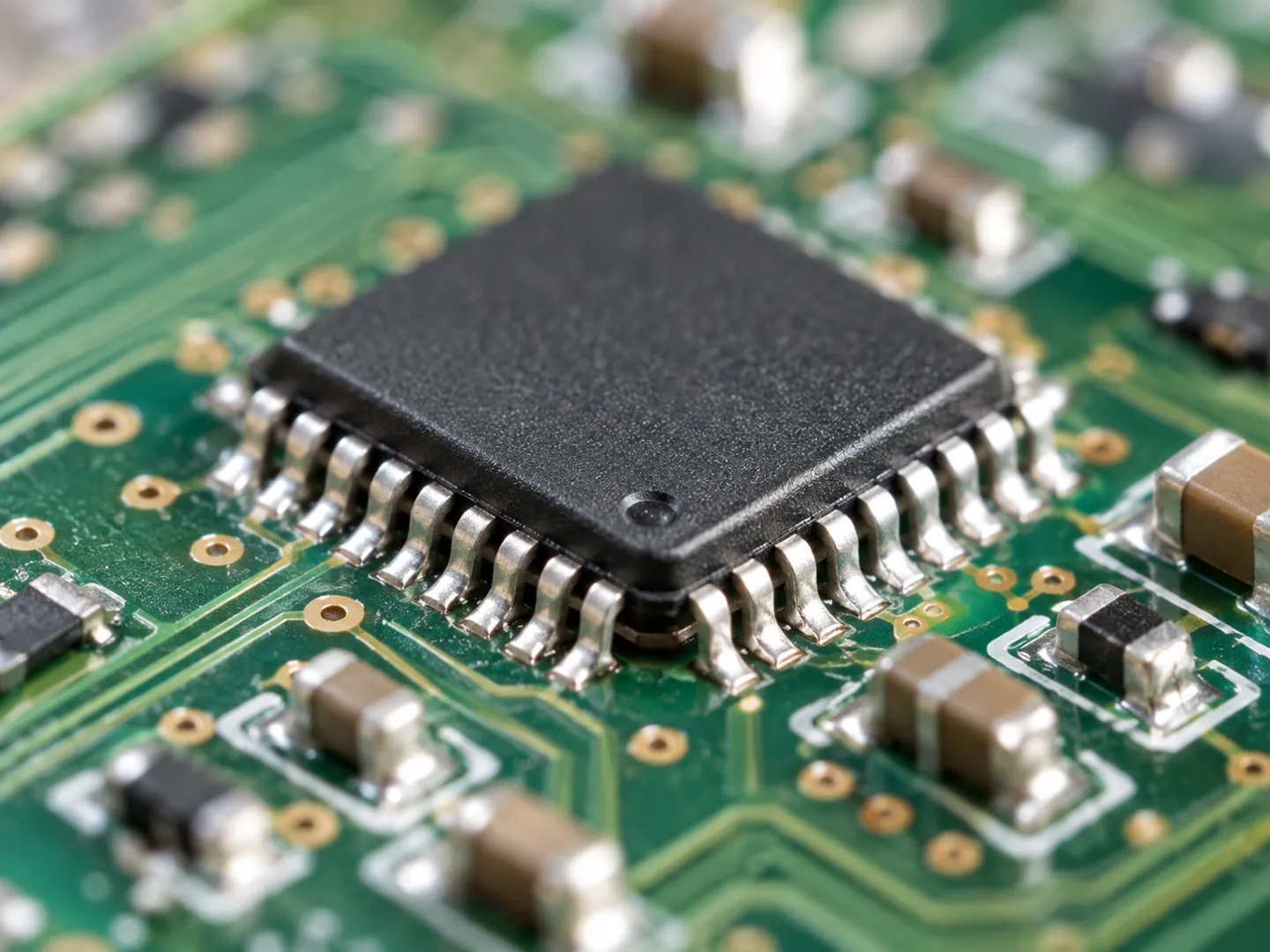
A microchip packs transistors, the tiny parts that amplify and control electrical signals, onto one block of semiconductor. Modern chips hold billions of them, printed with light in layers on a silicon wafer.
Travel the timeline01Principles
02THE SHORT ANSWER
The transistor came first.
The chip put many of them together.
THE TRANSISTOR
The first transistor, built at Bell Labs in December 1947, used two gold contacts on a slab of germanium to boost a signal up to 100 times.
See the timelineTHE CHIP
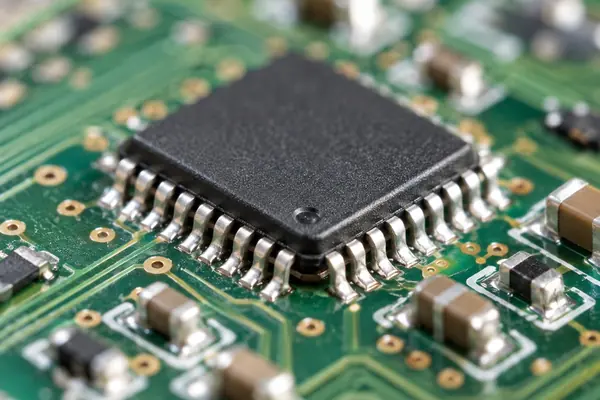
In 1959 engineers showed that a single block of semiconductor could hold several transistors, resistors and capacitors. That is the integrated circuit, or microchip.
How chips are madeTHE FACTORY
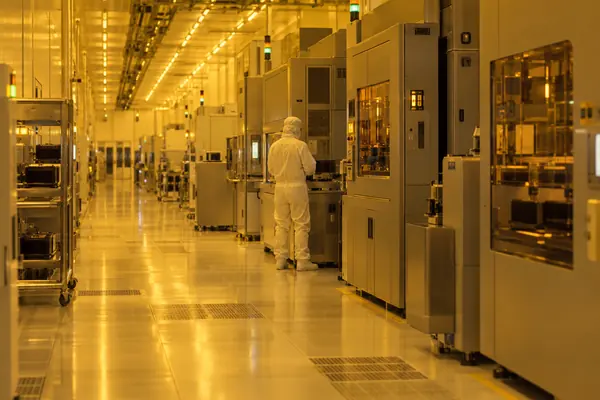
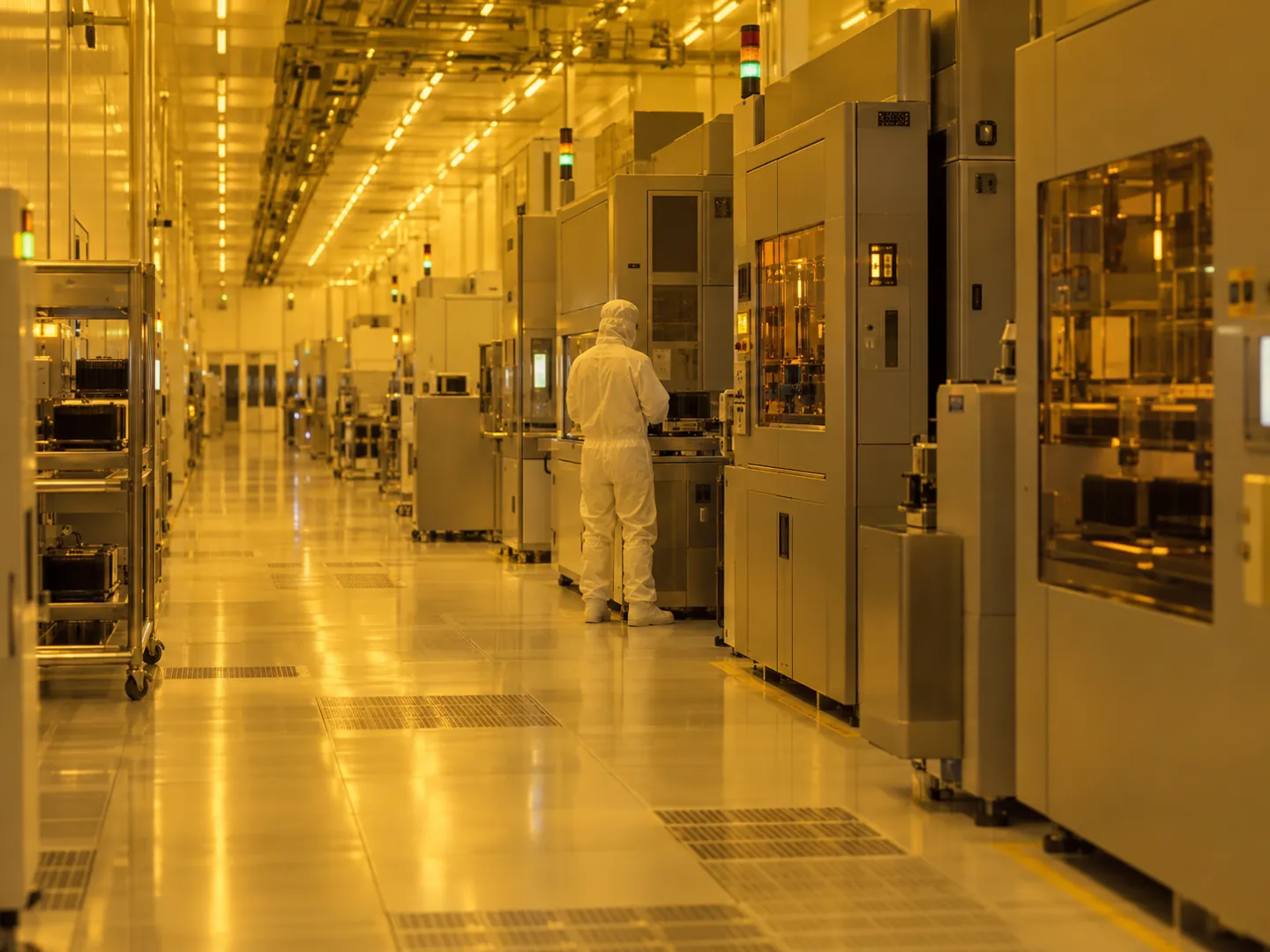
Chips are made in cleanrooms where the air is about 10,000 times cleaner than outside, through hundreds of steps that can take up to four months.
See the numbers03A QUICK TIMELINE
Pick a moment in the story to see how many components were involved. The bar shows how far along the climb from one transistor to billions it sits.
Dates and figures from the Computer History Museum, the Nobel Prize organisation and imec.
04TWO NUMBERS WORTH KNOWING
One figure on how a chip is stacked,
one on the air it is made in.
up to 100 layers
Patterned layers in a modern chip
Chips are built by stacking interconnected patterns on a silicon wafer. Modern chips can have up to 100 layers, which must line up with nanometre precision.
LAYERS · ASML
≈ 10,000× cleaner
Fab air compared with outside air
Most chipmakers use ISO class 1 cleanrooms: no more than 10 particles between 100 and 200 nanometres per cubic metre of air, and none larger.
CLEANROOM AIR · ASML
Moore's 1965 forecast of doubling every 12 months was revised in 1975 to a doubling every two years, according to the Computer History Museum.
05FROM SAND TO CHIP
The research centre imec describes chipmaking as a handful of steps, with the middle ones repeated hundreds of times to build up transistors and the metal wiring between them.
Pure silicon is drawn from a melt as a cylindrical ingot, then sliced into thin wafers up to 30 cm across.
Films such as silicon dioxide or metals are deposited onto the wafer from a gas or a vapour.
A light-sensitive coating is exposed to ultraviolet light through a mask, transferring the circuit pattern.
Unprotected material is etched away and impurities are added to form transistors. Finished wafers are tested and cut into hundreds of chips.
06PRINTING WITH LIGHT
Lithography machines print chip patterns with light. Deep ultraviolet systems use lasers at 248 or 193 nanometres. The smallest, most critical layers are printed with extreme ultraviolet light at 13.5 nanometres.
Extreme ultraviolet light is made by firing lasers at molten tin droplets about 25 microns across, ejected at 70 metres per second. Each droplet is flattened, then turned into a glowing plasma, 50,000 times every second.
07Questions
Another name for an integrated circuit: a single block of semiconductor material that holds many electronic components, such as transistors, resistors and capacitors, connected together.
It amplifies and controls electrical signals. The first one, built at Bell Labs in 1947, used the voltage on one gold contact to control the current through another, boosting a signal up to 100 times.
It began as a forecast. In April 1965 Gordon Moore predicted that chip complexity would double every 12 months, reaching 65,000 components by 1975. In 1975 he revised the pace to a doubling every two years.
The patterns on a chip are measured in nanometres. Most chipmakers use ISO class 1 cleanrooms, which allow no more than 10 particles between 100 and 200 nanometres per cubic metre, and none larger.
Chipmaking involves hundreds of steps, and going from design to mass production can take up to four months. The middle steps of layering, printing, etching and doping are repeated hundreds of times.
08Sources
ABOUT THIS NAME
doodlechip.com is part of the DoodleSale portfolio. It isn't in an auction right now, but you can ask about leasing it.